Dalseth Family & Cosmetic Dentistry

Apple Valley, MN Dentist

My Account

(952) 432-1101

  • Meet the Staff
    • Dr. Stephen Dalseth (Retired)
    • Meet Dr. Pascal Dalseth
    • Meet Dr. Kayla Blanek
    • Meet Dr. Jeffrey J. Mathiason
    • Meet Dr. Sara Michel
    • What Sets Us Apart?
    • Community Involvement
  • New Patients
    • Dental FAQ
    • Office Visits
    • Office Tour
    • Financial Information
    • No Insurance, No Problem
    • Patient Forms
    • Cancellation Policy
    • Testimonials
    • Blog
  • General Dentistry
    • Preventive Care
    • Fluoride
    • Periodontal Disease
    • Dentistry for Kids
    • Extractions
    • Fillings
    • Root Canals
    • Digital X-rays
    • Emergency Dental Care
  • Contact Us
    • Office Location
    • Schedule an Appointment
  • Restoration
    • Implants
    • Crowns
    • Bridges
  • Smile Enhancements
    • About Orthodontics
    • Cosmetic Dentistry
    • Cosmetic Dentistry FAQ
    • InvisalignĀ®
You are here: Home / Archives for Dalseth Family Dentistry

Valentine’s Day History

February 10, 2014 by Dalseth Family Dentistry

Valentine’s Day is best known as a celebration of love in all its forms. Pink hearts, red roses, and cute greeting cards adorn every surface you see. What many people don’t realize is that the modern Valentine’s Day celebration arose from a religious holiday.

St. Valentine’s Day was originally celebrated as a religious feast day in honor of early Christian martyrs. Three martyrs named Valentine were honored: a priest in Rome, the persecuted bishop of Interamna (a town in central Italy), and a saint martyred in Africa. This saint’s day was celebrated throughout Christendom, although it was removed from the Roman Catholic Calendar of Saints in 1969.

The origin of Valentine’s Day as a holiday for lovers began with Geoffrey Chaucer in his 1382 poem “Parlement of Foules.” Chaucer wrote, “For this was on Saint Valentine’s Day, when every bird cometh there to choose his mate,” and the modern romantic holiday was born. William Shakespeare and other writers mentioned Valentine’s Day as a day of love.

Valentine’s Day as we know it came about in the early 19th century. In Victorian England, printers began manufacturing small numbers of cards with romantic verses, lace, ribbons, and other frills. Anonymous Valentine’s Day card were a popular way for young lovers to exchange romantic sentiments in an otherwise prudish time. As the 19th century progressed, printers began mass manufacturing Valentine’s Day cards. People in the United States give an estimated 190 million valentines every year, and up to one billion if you count children exchanging cards at school! With the rise of the Internet, Valentine’s Day e-cards have become a popular mode of communication, with millions of e-cards sent each year.

The other items associated with Valentine’s Day include chocolate and flowers. The tradition of giving chocolates has been around for decades, and Richard Cadbury created the first box of Valentine’s Day chocolates nearly 150 years ago. Today, purchases of chocolate total over $1 billion in the United States alone, with 35 million heart-shaped boxes sold each year. Loved ones also exchange flowers, with red roses being associated with Aphrodite, the Greek goddess of love. On Valentine’s Day itself, florists sell nearly 200 stems of roses.

Although many people dismiss Valentine’s Day as a commercialized “Hallmark holiday,” it is beloved to couples and romantics across the United States and other countries. The team at Dalseth Family & Cosmetic Dentistry wants to remind all patients that no matter what your celebratory plans, February 14th can be a wonderful day to celebrate the loved ones in your life. Happy Valentine’s Day!

Filed Under: Blog

February is Heart Month

February 3, 2014 by Dalseth Family Dentistry

The American Academy of Periodontology stresses the importance of good oral health since gum disease may be linked to heart disease and stroke. Thus far, no cause-and-effect relationship has been established, but there are multiple theories to explain the link between heart disease and periodontal disease. One theory suggests that oral bacteria may affect heart health when it enters the blood and attaches to the fatty plaque in the heart’s blood vessels. This can cause the formation of blood clots. Another theory suggests the possibility that inflammation could be a contributing link between periodontal disease and heart disease. Gum disease increases plaque buildup, and inflamed gums may also contribute to the development of swollen or inflamed coronary arteries.

What is coronary artery disease?

Coronary artery disease is caused in part by the buildup of fatty proteins on the walls of the coronary arteries. Blood clots cut off blood flow, preventing oxygen and nutrients from getting to the heart. Both blood clots and the buildup of fatty proteins (also called plaque) on the walls of the coronary arteries may lead to a heart attack. Moreover, periodontal disease nearly doubles the likelihood that someone will suffer from coronary artery disease. Periodontal disease can also worsen existing heart conditions, so many patients who suffer from heart disease need to take antibiotics before any dental procedures. This is especially true of patients who are at greatest risk for contracting infective endocarditis (inflammation of the inner layer of the heart). The fact that more than 2,400 people die from heart disease each day makes it a major public health issue. It is also the leading killer of both men and women in the United States today.

What is periodontal disease?

Periodontal disease is a chronic inflammatory disease that destroys the bone and gum tissues around the teeth, reducing or potentially eradicating the system that supports your teeth. It affects roughly 75 percent of Americans, and is the leading cause of adult tooth loss. People who suffer from periodontal disease may notice that their gums swell and/or bleed when they brush their teeth.

Although there is no definitive proof to support the theory that oral bacteria affects the heart, it is widely acknowledged better oral health contributes to overall better health. When people take good care of their teeth, get thorough exams, and a professional cleaning twice a year, the buildup of plaque on the teeth is lessened. A healthy, well-balanced diet will also contribute to better oral and heart health. There is a lot of truth to the saying “you are what you eat.” If you have any questions about you periodontal disease and your overall health, give our Apple Valley, MN office a call!

Filed Under: Blog

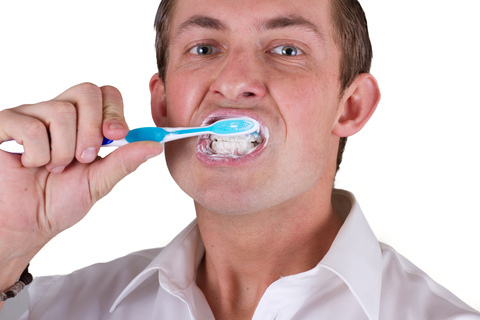
I don’t brush while I’m at work. Should I?

January 27, 2014 by Dalseth Family Dentistry

Yes, absolutely. A recent survey by Oral-B® reveals that despite knowing that a healthy, good-looking smile affects not only their personal wellness but their professional image as well, very few people (only 14 percent) brush and floss at the office regularly. What’s more, three quarters of people who responded to the survey said they ate twice or more a day at work.

Today, Dr. Stephen Dalseth, Dr. Pascal Dalseth, Dr. Todd Weber and Dr. Sara Michel and our team thought we would provide some tips for brushing at work.

  • Leave a toothbrush at work to increase your likelihood of brushing
  • Brush your teeth twice a day with fluoride toothpaste. Replace your toothbrush every three or four months, or sooner if the bristles are frayed. A worn toothbrush won’t do a good job of cleaning your teeth.
  • Clean between teeth daily with floss or an interdental cleaner; this helps remove plaque and food particles from between the teeth and under the gum line. Tooth decay-causing bacteria still linger between teeth where your toothbrush bristles can’t reach.

And remember to brush for 30 to 45 seconds across visible parts of the teeth. Brushing after breakfast or lunch will eliminate any remaining food particles and odors. We recommend people brush their teeth twice and floss once a day to remove plaque and other harmful bacteria.

To schedule your next appointment with Dr. Stephen Dalseth, Dr. Pascal Dalseth, Dr. Todd Weber and Dr. Sara Michel at our Apple Valley, MN office, please give us a call!

Filed Under: Blog

How much calcium does my child need?

January 20, 2014 by Dalseth Family Dentistry

When you were a kid, your parents may have told you to drink milk to build strong bones and grow tall and strong. Now that you have children of your own, you may hear yourself parroting those instructions you received years ago. Getting enough dairy is essential for young children whose teeth are growing. A child who consumes the recommended daily serving of dairy will develop healthy, strong teeth for the rest of his or her life.

So, which foods are the best in terms of acquiring the right amount of calcium? Milk and other dairy products are excellent sources of calcium. Milk also contains vitamin D, phosphorus, magnesium, and proteins. Magnesium promotes calcium deposits in your enamel, while phosphorus forms a small but important barrier against acidic foods that cause cavities. Vitamin D and protein are used by a child’s body to build bone tissue and maintain dental health.

According to a recent study, the majority of Americans, including children, do not receive enough calcium. In fact, according to the Academy of General Dentistry, only one in five children meets even the minimum standards for calcium consumption. The U.S. Department of Agriculture recommends that children under the age of eight should receive two and a half cups of dairy per day. Children older than eight need three full cups, the same as adult men and women. In addition to milk, eating yogurt is a great way your child can increase his or her dairy consumption. Drinking sugary beverages in place of milk causes cavities and tooth decay.

If your child does not get enough dairy consumption, they run the risk of improper tooth development and other dental health problems. Dr. Stephen Dalseth, Dr. Pascal Dalseth, Dr. Todd Weber and Dr. Sara Michel and our team at Dalseth Family & Cosmetic Dentistry encourage you to monitor your child’s dairy consumption to ensure he or she grows healthy teeth to last a lifetime.

Questions? Give us a call at our Apple Valley, MN office!

Filed Under: Blog

Can my child really avoid tooth decay?

January 13, 2014 by Dalseth Family Dentistry

Great question! Yes, in fact, tooth decay is preventable! Decay, which is caused by sugars left in your child’s mouth, can turn into an acid, which in turn can break down his or her teeth. Children are at high risk for tooth decay for a simple reason: many children and adolescents tend to be lax in their oral hygiene habits.

So, how can your child prevent tooth decay?

  • Start early. After the age of two, brush your child’s teeth with fluoride toothpaste twice a day. And, if possible, clean between the teeth with dental floss at least once a day, preferably before they go to bed.
  • Don’t allow your little ones to eat after cleaning teeth at bedtime, as salivary flow decreases while they sleep and their teeth become vulnerable to cavities.
  • Do not allow your little ones to nibble food or sip drinks continuously, and keep in mind that a low-sugar diet also helps keep tooth decay at bay. Allow time between meals for saliva to neutralize acids and repair the teeth.
  • Drinking water frequently throughout the day can also reduce the possibility of new cavities forming.
  • Dental sealants can also protect your children’s teeth from cavities. Sealants, which are applied to the chewing surfaces of molars, act as a shield between the tooth and harmful bacteria.

Finally, make sure your child visits Dalseth Family & Cosmetic Dentistry approximately every six months for a checkup and routine cleaning! Please give us a call at our Apple Valley, MN office.

Filed Under: Blog

Oral Cancer Facts and Figures

January 6, 2014 by Dalseth Family Dentistry

Oral cancer is largely viewed as a disease that affects those over the age of 40, but it can affect all ages, even non-tobacco and alcohol users. Oral cancer can occur on the lips, gums, tongue, inside lining of the cheeks, roof of the mouth, and the floor of the mouth. Our team at Dalseth Family & Cosmetic Dentistry recently put together some facts and figures to illustrate the importance of visiting our Apple Valley, MN office.

Our friends at the American Cancer Society recommend an oral cancer screening exam every three years for people over the age of 20 and annually for those over age 40. Because early detection can improve the chance of successful treatment, be sure to ask Dr. Stephen Dalseth, Dr. Pascal Dalseth, Dr. Todd Weber and Dr. Sara Michel and our team to conduct an oral exam during your next visit to our Apple Valley, MN office.

  • Symptoms of oral cancer may include a sore in the throat or mouth that bleeds easily and does not heal, a red or white patch that persists, a lump or thickening, ear pain, a neck mass, or coughing up blood. Difficulties in chewing, swallowing, or moving the tongue or jaws are often late symptoms.
  • The primary risk factors for oral cancer in American men and women are tobacco (including smokeless tobacco) and alcohol use. Risk rises dramatically (30%) for people who both smoke and consume alcohol regularly.
  • Oral cancers are part of a group of cancers commonly referred to as head and neck cancers, and of all head and neck cancers they comprise about 85% of that category.
  • Oral cancer is the sixth most common cancer among men.
  • Oral cancer is more likely to affect people over 40 years of age, though an increasing number of young people are developing the condition.
  • Death rates have been decreasing over the past three decades; from 2004 to 2008, rates decreased by 1.2% per year in men and by 2.2% per year in women, according to the American Cancer Society.
  • About 75% to 80% of people with oral cavity and pharynx cancer consume alcohol.
  • The risk of developing oral cavity and pharynx cancers increases both with the amount as well as the length of time tobacco and alcohol products are used.
  • For all stages combined, about 84% of people with oral cancer survive one year after diagnosis. The five- and ten-year relative survival rates are 61% and 50%, respectively.
  • It is estimated that approximately $3.2 billion is spent in the United States annually on treatment of head and neck cancers.

Cancer can affect any part of the oral cavity, including the lip, tongue, mouth, and throat. Through visual inspection, Dr. Stephen Dalseth, Dr. Pascal Dalseth, Dr. Todd Weber and Dr. Sara Michel and our team at Dalseth Family & Cosmetic Dentistry can often detect premalignant abnormalities and cancer at an early stage, when treatment is both less extensive and more successful.

Please let us now if you have any questions about your oral health either during your next scheduled appointment, by giving us a call or asking us on Facebook.

Filed Under: Blog

New Year’s Day Around the World

December 30, 2013 by Dalseth Family Dentistry

New Year’s Day marks the beginning of the calendar year in most parts of the world. The holiday is celebrated on January 1st of each year. Customs and celebrations vary by country, religion, and even individual desires. Whether celebrated quietly or with gusto, the day brings the start of new opportunities for those that observe it.

United States and Canada

In both the US and Canada, celebrations begin on New Year’s Eve. At midnight on January 1st the New Year is welcomed with bells, horns, whistles, and other noisemakers. Fireworks are often part of the celebrations. In New York City, Times Square comes alive with revelers. In Toronto, there are large celebrations which may feature concerts, late-night partying, sporting events, and fireworks, with free public transit service during peak party times. Many individuals in North America greet the year by making resolutions for improvements in their lives.

China

In China, many people celebrate two forms of a new year. They may observe January 1st, but the traditional Chinese New Year is based on a lunar calendar. Parades with paper lanterns and dragons made from silk are a significant part of the festivities. Legends say that the dragon spends most of its time in hibernation so fireworks are used to keep the dragon awake.

Jewish Celebration

Jewish New Year’s observances begin with Rosh Hashanah, the first day of the New Year, and end with Yom Kippur, the Day of Atonement. This ten-day celebration is held in September or October, based on the Hebrew calendar. The New Year is not marked as much with loud celebrations as with personal insight to mend wrongs and resolve to better oneself.

Other countries and cultures also have different dates for New Year’s Day observances:

  • Vietnam observes the New Year in February
  • In Iran, the day is celebrated on March 21st
  • Islamic cultures often observe the tenth day of the month of Muharram
  • Russian Orthodox observers use the Julian calendar and celebrate on January 14th
  • Buddhist celebrations are held from April 13th through 15th

If you observe New Year’s Day by making healthy resolutions, include dental care in your plans with Dr. Stephen Dalseth, Dr. Pascal Dalseth, Dr. Todd Weber and Dr. Sara Michel. The health of your teeth and gums contributes to your overall health. Caring for your mouth now can prevent many dental problems later in life. Dalseth Family & Cosmetic Dentistry wishes you a healthy, prosperous, and happy New Year!

Filed Under: Blog

Solutions for Dry Mouth (Xerostomia)

December 23, 2013 by Dalseth Family Dentistry

Dry mouth, or xerostomia, is a common side effect of many medications. It can also be a side effect of cancer treatments, or the result of certain auto-immune diseases. Dr. Stephen Dalseth, Dr. Pascal Dalseth, Dr. Todd Weber and Dr. Sara Michel and our team at Dalseth Family & Cosmetic Dentistry will tell you that for most people, discontinuing their medication isn’t an option. The solution is two-fold: find ways to increase saliva production and eliminate specific things that are likely to increase dryness in the mouth.

Lack of saliva creates a situation in the mouth that allows harmful organisms such as yeast and bacteria to thrive. It may also make it difficult to swallow food, create a burning feeling in your mouth, or cause bad breath, among other problems.

Medications that are known to cause dry mouth include:

  • Anti-depressant drugs
  • Anti-anxiety medications
  • Drugs for lowering blood pressure
  • Allergy and cold medications — antihistamines and decongestants
  • Chemotherapy drugs
  • Medications to alleviate pain
  • Drugs used in the treatment of Parkinson’s disease

Saliva helps people digest their food. It also functions as a natural mouth cleanser. Xerostomia increases the risk you will develop gum disease or suffer from tooth decay.

Solutions for dry mouth

  • Carry water wherever you go, and make a point of taking regular sips.
  • Avoid oral rinses that contain alcohol or peroxide.
  • Chew sugarless gum or suck on sugarless hard candies that contain xylitol.
  • Limit your consumption of caffeine, carbonated beverages (including seltzer and sparkling waters), and alcoholic beverages.
  • Brush your teeth at least twice a day, and use dental floss or other inter-dental products to remove food particles that get stuck between your teeth.
  • Look for oral rinses and other oral hygiene products that bear the American Dental Association (ADA) Seal of Approval.
  • Brush your teeth and use oral rinses that contain xylitol. Certain gels and oral sprays are equally helpful. Biotene is one over-the-counter brand that makes products designed to treat dry mouth.
  • Make sure you get your teeth checked and cleaned twice a year. Dr. Stephen Dalseth, Dr. Pascal Dalseth, Dr. Todd Weber and Dr. Sara Michel will be able to examine your mouth for problems and treat them before they turn into something more serious.

You may not be able to solve your dry mouth problem altogether, but you’ll be able to deal with it by following these recommendations. You’ll be able to increase saliva production while reducing your risk of more serious dental problems. To learn more about preventing dry mouth, or to schedule an appointment with Dr. Stephen Dalseth, Dr. Pascal Dalseth, Dr. Todd Weber and Dr. Sara Michel, please give us a call at our convenient Apple Valley, MN office!

Filed Under: Blog

The Importance of Baby Teeth

December 16, 2013 by Dalseth Family Dentistry

Dr. Stephen Dalseth, Dr. Pascal Dalseth, Dr. Todd Weber and Dr. Sara Michel and our team know it can be easy to underestimate the significance of baby teeth. At Dalseth Family & Cosmetic Dentistry, we sometimes meet parents who assume that since their child’s baby teeth, also known as primary teeth, eventually fall out and are replaced, they are less important. But did you know baby teeth serve purposes other than biting, chewing, and digesting food properly?

Baby teeth are essential not only for your child’s language development, but they also serve other important functions, like contributing to the normal development of your child’s jaw bones and facial muscles. Baby teeth also reserve space for your child’s future permanent teeth.

So, when do baby teeth fall out?

A baby tooth is intended to remain in your child’s mouth until the permanent tooth underneath it is ready to take its place. Sometimes, either due to a tooth being knocked out accidentally or being removed because of tooth decay, kids lose baby teeth before the permanent teeth are ready to erupt. If a tooth is lost, the teeth on either side of the open space may possibly push into the open space. The result? There may not be enough room for the permanent tooth when it is finally ready to erupt.

If you have any questions about your toddler’s teeth, or if your child is experiencing issues that concern you, please give us a call to set up an appointment at our convenient Apple Valley, MN office.

Filed Under: Blog

How do I avoid bad breath?

December 9, 2013 by Dalseth Family Dentistry

At Dalseth Family & Cosmetic Dentistry, we see a lot of patients who are concerned about their bad breath, also known as halitosis. So today we thought we would educate our patients about what you can do to keep your pearly whites clean and your breath minty fresh!

Naturally, good oral hygiene on your part is the first step. With proper brushing and flossing you can keep halitosis in check. Even though you may have done an excellent job of brushing and flossing your teeth, if you fail to brush your tongue, you may still have bad breath. Bad breath is caused by odor-producing bacteria that grow in your mouth. Certain foods, medications, smoking, sinus issues, or even gum disease can cause bad breath.

Besides proper brushing and flossing, bad breath can be prevented if you:

Stop smoking/chewing tobacco-based products: Ask Dr. Stephen Dalseth, Dr. Pascal Dalseth, Dr. Todd Weber and Dr. Sara Michel and our team for tips on kicking the habit.

Keep your mouth hydrated: Because a dry mouth typically leads to bad breath, drinking water or eating oranges or celery may help.

Visit our Apple Valley, MN office for regular dental checkups: By visiting Dalseth Family & Cosmetic Dentistry at least twice a year, you will keep bad breath at bay. Dr. Stephen Dalseth, Dr. Pascal Dalseth, Dr. Todd Weber and Dr. Sara Michel will conduct an oral exam and will be able detect and treat periodontal disease, dry mouth, or other problems that may be the cause of bad mouth odor.

Filed Under: Blog

  • « Previous Page
  • 1
  • 2
  • 3
  • 4
  • 5
  • …
  • 15
  • Next Page »

Browse Our Site

  • Home
  • Meet the Staff
  • New Patients
  • General Dentistry
  • Smile Restoration
  • Smile Enhancements
  • Office Location
  • My Account
  • Sitemap

Visit Us

Dalseth Family & Cosmetic Dental
14505 Glazier Ave.

Apple Valley, MN 55124

952.432.1101

Connect With Us

© 2026 · Dalseth Dental · Website by RV Tech Solutions